There is a site I have been trying to finish since 2015.
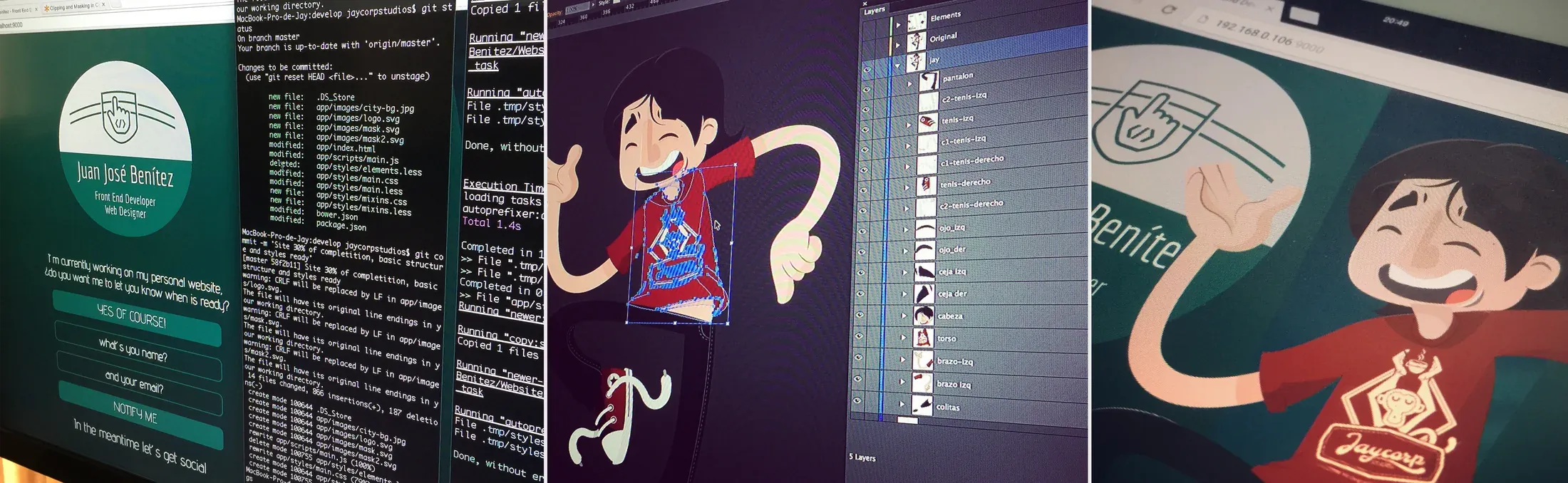
The version from that year no longer exists as the current idea, but the problem was the same: I needed to explain a career change that did not fit well in my CV. In 2026 I came back to that pending thing with another question on top: how do I explain what I do without reducing it to a job title?
That is where this project came from.
I wanted a place that explained why my work has always lived between design and engineering, even during the years when I myself tried to separate those two things.
The first attempt
In 2015 I had just earned my degree as a software engineer and I wanted to change careers. I already had real experience, but I came from another world: corporate design, advertising, motion graphics, 3D modeling, websites, and interactive experiences.
The problem was simple. I could prove my work as a creative, but I did not know if that would matter to a technology company. On paper, my story still looked more creative than technical.
At that time I worked at Tradecorp, a company of products and agrochemicals for the field. I was Corporate Design manager and I loved working there.
I liked the work, the environment, the people, the friendships, and the daily rhythm. The change came from a dream that had been growing for a long time, not from frustration with Tradecorp.
Besides designing printed material, producing video, creating websites, and building interactive presentations, I also designed applications that the IT area later developed. It was a natural mix of visual, product, and software, although at that time I still did not name it that way.
I wanted to enter a company completely focused on technology. Because of my experience and because of what I liked most, Front End was the most logical bridge: a position where the visual and the logical live together naturally.
I liked what I was doing, but I wanted to be closer to web products, applications, and teams where software was the center of the work.
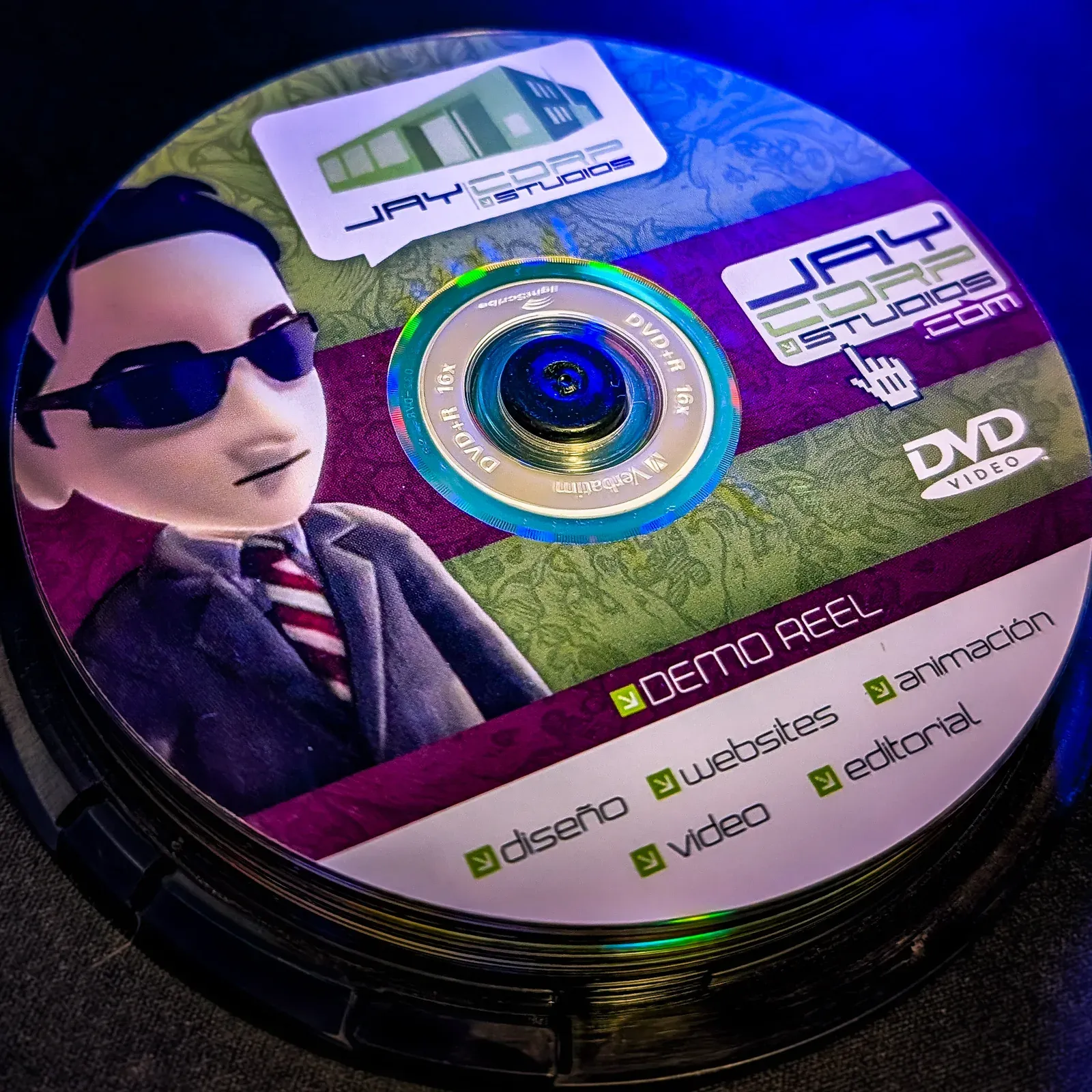
That is where the need for a personal site appeared. My printed CV looked more creative than engineer. In fact, it included a DVD with my demo reel. I needed a place that explained the whole story.
I had a big plan for that site, but I could not wait to finish it. My CV already pointed to that URL and the search process was already moving, so I published something that worked as a placeholder while I built the ambitious version.
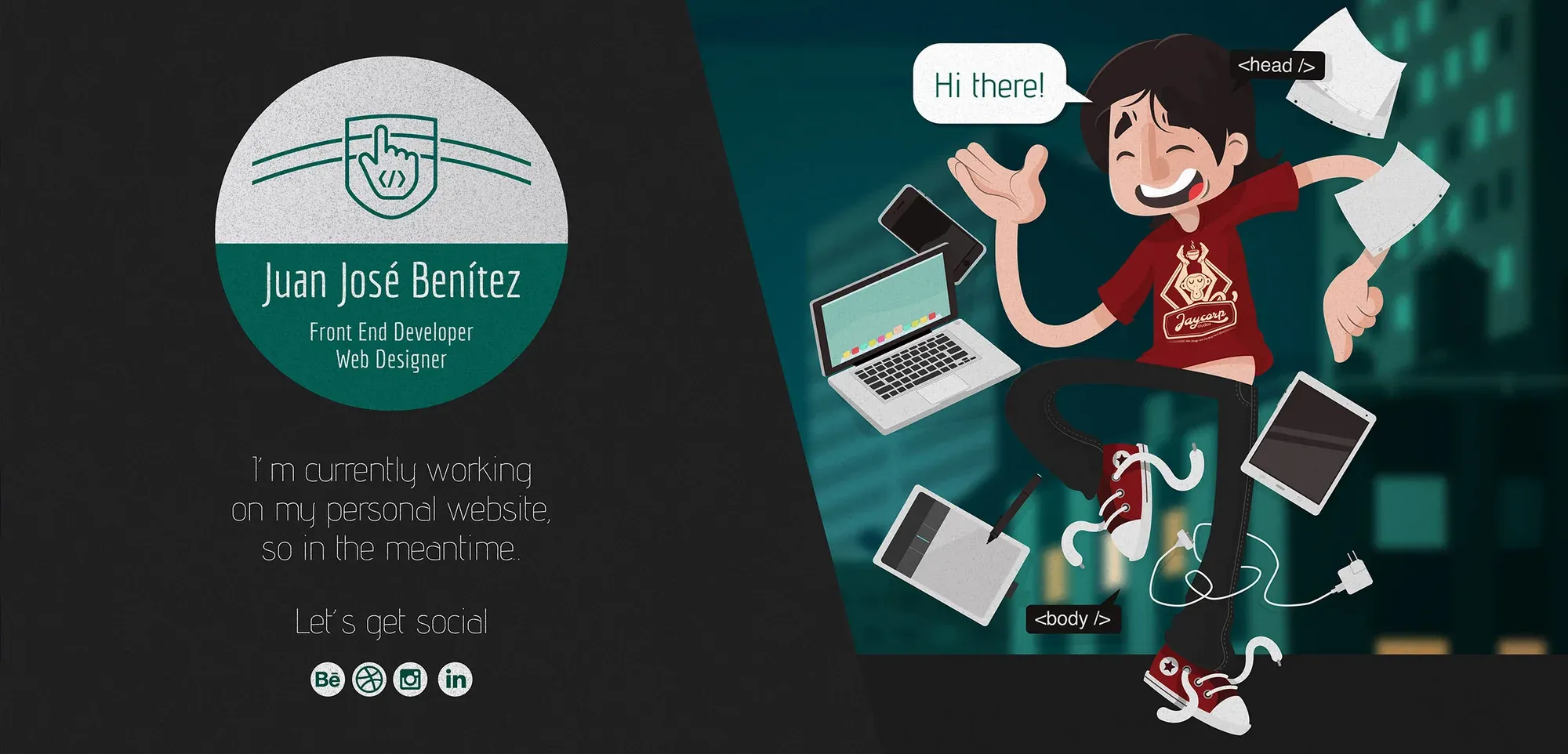
The ambitious version never arrived because the goal arrived first.
The site was enough to get the attention of the right people. I got interviews, passed them, and joined Luxoft as a Mid Front End Developer. That moment changed my life. I spent a few months working in San Francisco, in the Hotwire offices, living a dream I thought was impossible.
The challenge was big. The new priority was to be up to that stage.
After that, the pending thing got lost between challenges, changes, and time.
2026 and the same question
On the last day of May 2026 I woke up with the news that I was part of the industry’s layoff statistics.
It took me several days to process it. When I finally could look at it more calmly, I realized I was tired and fairly disappointed and I needed to take some time to detox before running into the next process.
When I started looking for work again, the market no longer felt the same. I sent applications, received few replies, and saw processes with little follow-up. I also saw that roles were changing, and it was something I had seen coming.
Positions centered on a single specialty still exist, but more and more roles are appearing that mix things that used to be separated: Front End, Back End, UI, UX, data, automation, product, and AI.
That did not surprise me that much. Like I said, I already saw it coming, and in my personal projects I had already been working that way for a while, even before AI. I had an idea, wrote a PRD, used AI in the creative process, and then developed by orchestrating agents under my own guidelines.
That is how I built a personal finance app for myself, my family, and friends, a life timeline integrated with Immich, presentations for courses, and other experiments that before would have taken me months.
The advantage was there, but the artifact was still missing.
How do I prove that I can cross design, engineering, and AI without it looking like an inflated list of skills? Why did I stop pushing my personal brand right when I needed it most?
It was time to return to The Jaycorp Studios.
The idea that started it all
At first I thought about rebuilding my brand, exposing my skills, and creating a base for future projects. It sounded good, but it was still too general.
The idea appeared when I remembered that first failed attempt at the site. In 2015 I wanted to prove that I was also an engineer. Over time, as I moved toward full stack roles and worked more and more with backend topics, I started hiding part of my creative side.
I think it was more of a defense than a conscious decision. I did not want other engineers to read me as “the designer who now programs”. I wanted to prove that I could compete from engineering, that I was up to it.
So I pushed harder toward that side and let the creative part slowly move into the background.
Now I see it differently. That duality was always there and it is part of what defines me as a professional. It also makes the profile weird. Later I remembered when people like this were called “unicorns”.
That is where the first concept came from: two forces that have always been in the same person. The Engineer and The Creative.
I started writing a story where those two characters came out of me, traveled through my path, and in the end joined back together. The site was going to start with the typical introduction, a real photo of me, and then the jump to illustrated characters.
That idea did not last long.
The friction of mixing worlds
I started sketching characters. I am not that good at drawing, but I can explore images generated with AI from basic sketches.
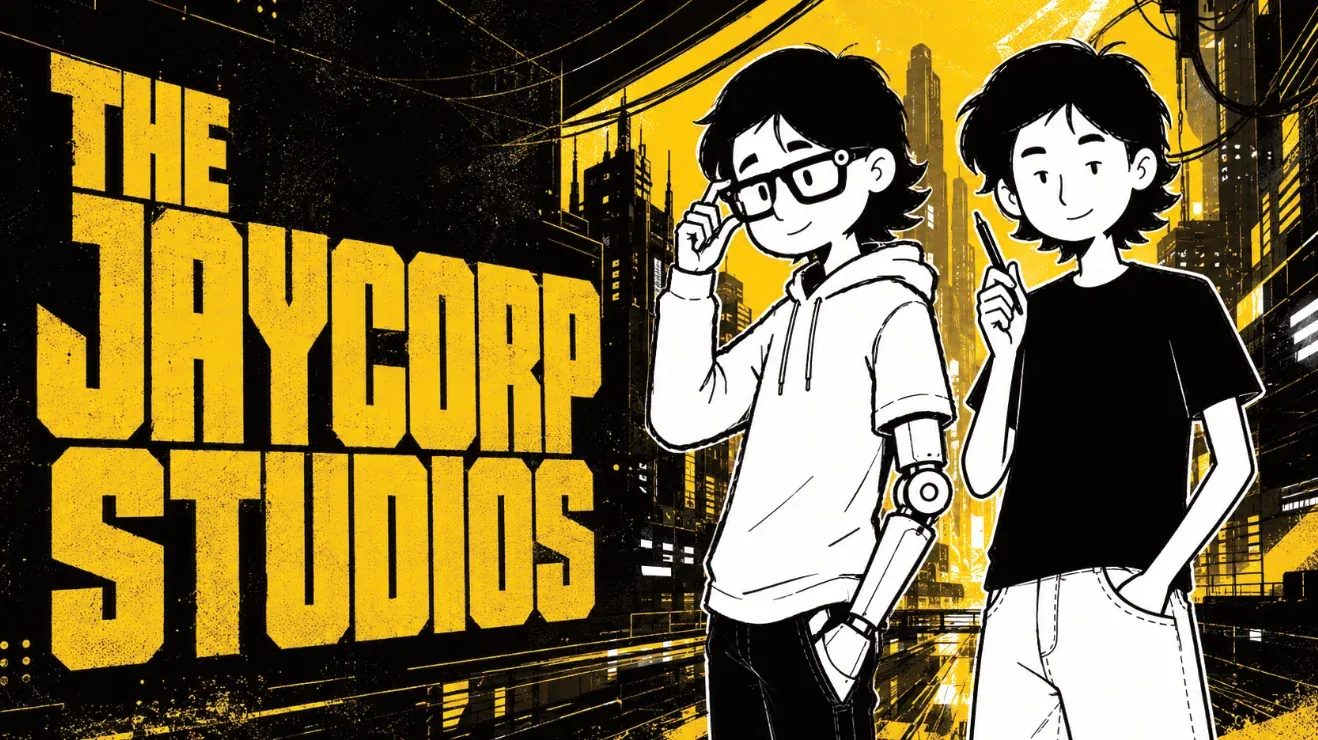
I also reviewed the history of logos that had accompanied my brand since adolescence.
I wanted to start from zero without erasing the history. The Jaycorp Studios had always been that mental place where too many interests fit: design, animation, 3D, music, software, technology, and video games.
The concept of the Studio came from there. It was that imaginary agency that stayed with me for many years, the name of a place where I could work from different disciplines without choosing only one forever.
Then I understood that place already existed literally.
My physical studio has two desks and two kinds of work happening all the time. On one there can be animation, editing, or visual exploration. On the other, development, agents, PRDs, and architecture.
That is where the setting of the site appeared: a studio split into two zones, each one for the specialist character of that discipline.
The creative block
With the concept defined I moved to Figma and made a classic mistake: I focused too soon on the graphic finish.
I went into palette, texture, characters, and composition before solving the structure well. For a couple of days nothing convinced me. I had creative peaks, hit a wall, and got blocked again.
The main problem was the mix of my real photography with illustrated characters. Everything felt forced.
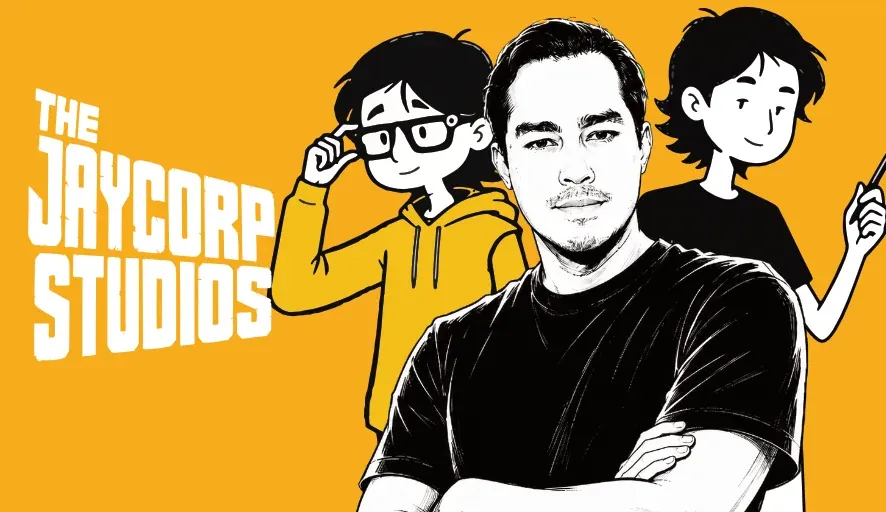
I tried ideas that I later discarded. A realistic version of the studio that transitioned into an illustrated version (at that moment I was thinking about the Take on Me video). A scene where I accidentally spilled ink and the characters came out of it. Variants where the story depended too much on explaining a visual trick.
That transition was my biggest friction and it would not let me move forward.
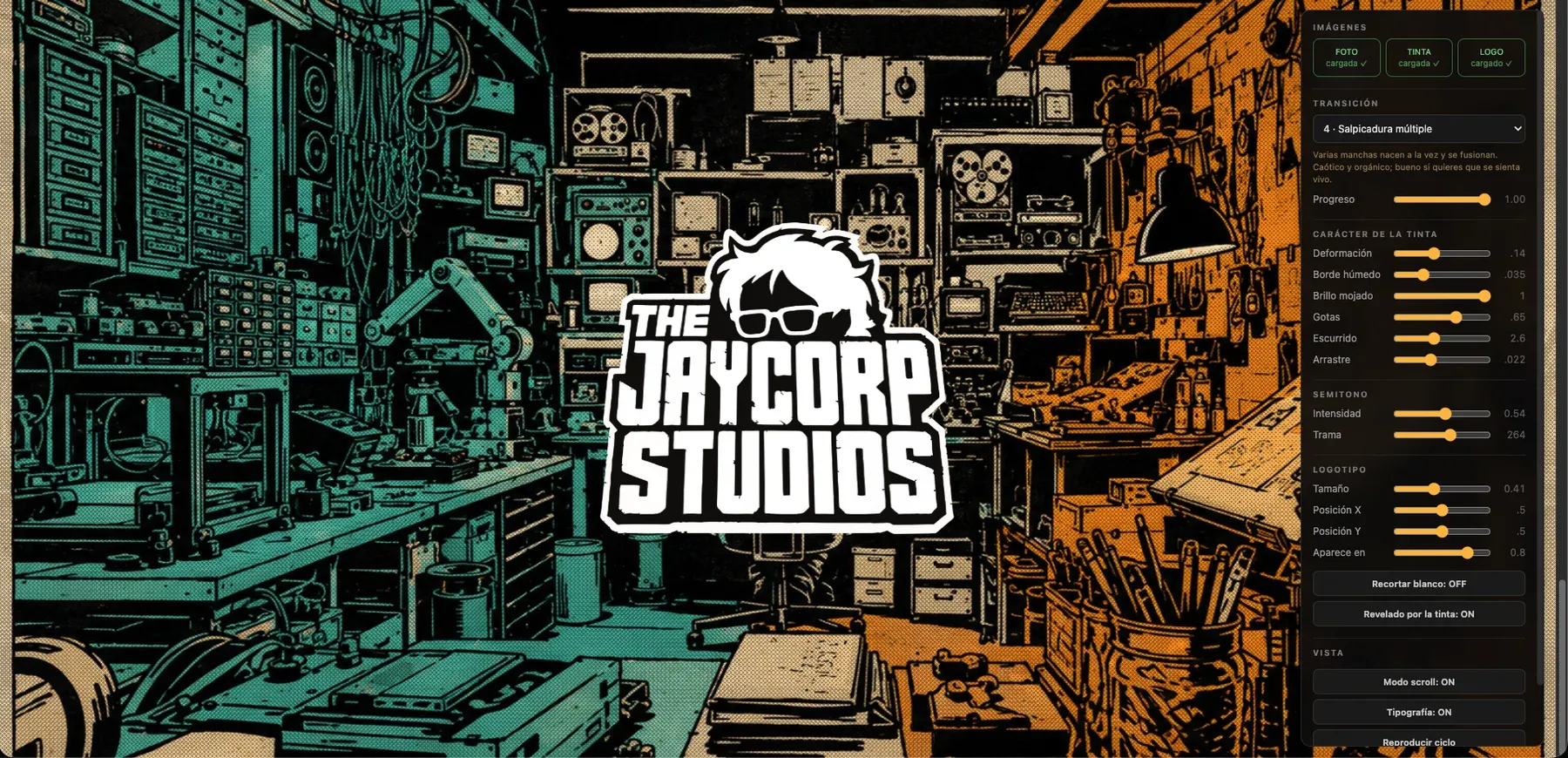
The way out was to take a step back and return to the wireframe.
When I built the structure without falling in love with the finish, I understood something simple: my photo did not add anything. Also, it was the most common thing in the world on a personal site.
If the site was talking about two ways of working, the characters could be introduced from the first frame. I did not need to appear as a photo to validate anything.
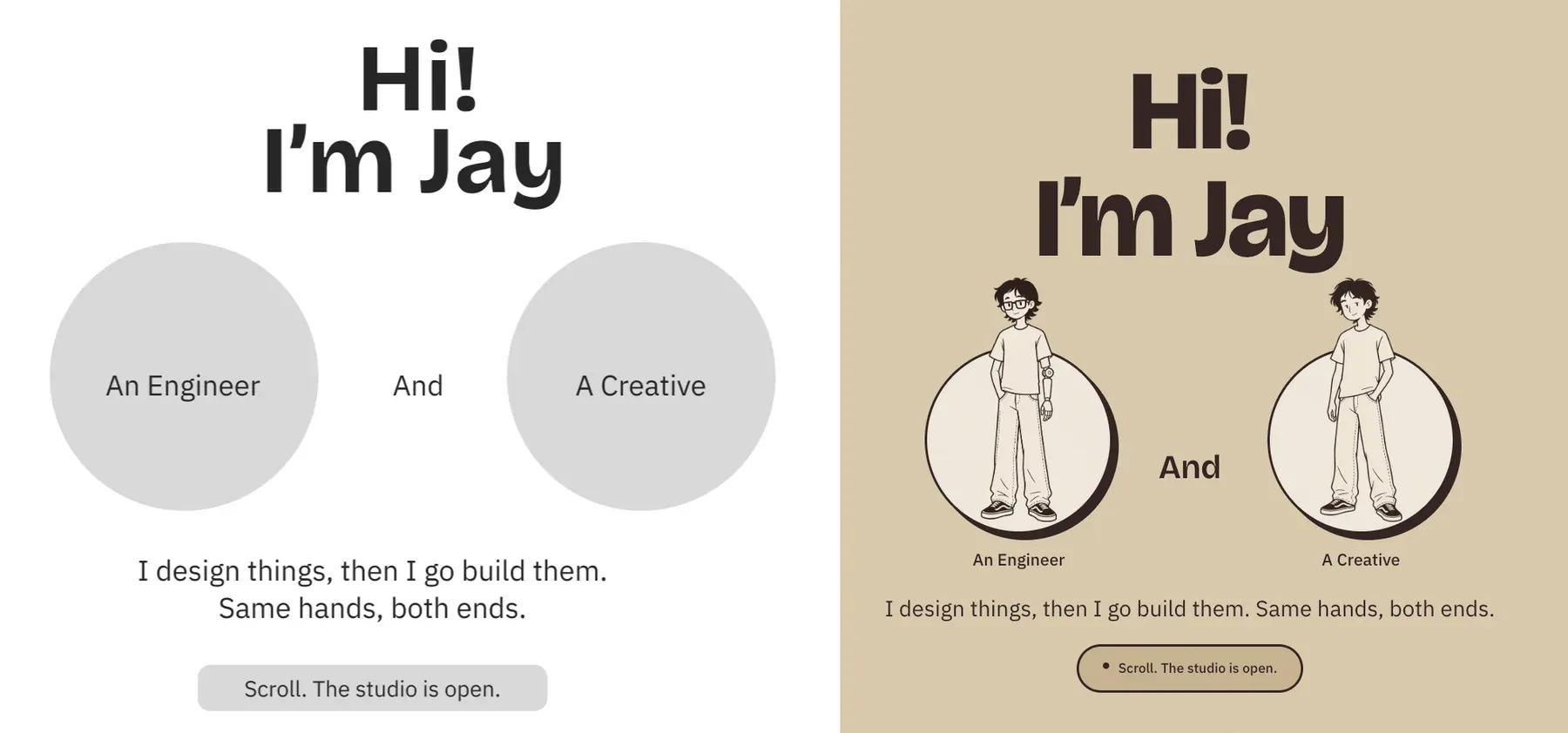
That discard unblocked me and solved several things:
- The site could stay in a single visual style.
- The characters stopped competing with a photo.
- The Studio could become an explorable place.
Then came the 3D decision. A flat illustration of the studio fell short for the kind of journey I was imagining. If the camera could move inside the place, each section could feel like a different position within the same space.
That is why the studio ended up being 3D, trying to emulate a flat illustration style.
The first prototype
When the general style was already on its way, the agents came in.
I polished the PRD, prepared the visual materials, and gave Claudio (my favorite agent) a very concrete instruction: build a first draft of the experience without marrying it yet to a framework or to a definitive architecture.
The goal was to experience the story, validate the scroll, the navigation between scenes, and, above all, the crossing between the two sides of the studio.
That crossing was the central argument: to go from The Engineer to The Creative, the camera had to cross the desk.
To polish the studio I needed another artifact: a development lab where I could move objects, turn elements on and off, adjust lights, capture shots, and save configurations. Claudio built that sandbox and it became a key tool for the project.
The prototype made clear that the room needed its own production tools, besides the final files that would end up visible on the site.
The technical decisions
With a result that already convinced me, it was time to think about production. For the real version I chose Astro.
I had used it on a big project at Rappi, which I feel very proud of and will write about in the future. I liked it for a very concrete reason: it forces you to decide what JavaScript reaches the browser. The islands model fits well with a site where almost everything should be prerendered, but some parts need measured interaction.
This project has a very visual main page in addition to the blog. It does not need a server to exist. It can be pregenerated as static HTML, live in an S3 bucket, be served behind a CDN (CloudFront), and load only the JavaScript needed for the experience.
For me, performance in this project is expected and communicates technical skill and attention to detail.
If I claim that I can build ambitious visual experiences with technical judgment, the page cannot feel heavy. Motion has to support the story, not get in the way, create noise, or exist because of my own whim. 3D has to come in when it adds something and disappear when the device, data saving, or prefers-reduced-motion asks for it.
That is why the architecture ended up with several rules:
- The content does not depend on JavaScript.
- WebGL is expected, but optional.
- There is no frame loop running at rest.
- The 3D studio has a single source shared between the site and the lab.
- The blog should be a place to expand what the site cannot tell in so much detail.
What I learned
The biggest learning was understanding which parts of the project had to pass through my hands and be more “handmade”, because I could very well have written a PRD, passed it to the agents, and waited for a complete first version. I have already done that several times, and the results can be good.
However this project had a personal load because it had been pending since 2015, from an idea I left stored away for too long.
I needed to have much more control over the creative process. AI helped me explore, organize, and accelerate parts of the process, but I needed to feel where the idea got stuck. I needed to experience those blocks and find the way to overcome them. And when that happened and more ideas came, I experienced again that feeling of satisfaction with my creations. That is something I feel AI has taken away from us. Even if we manage to create more and faster, that feeling is not as recurring now.
I wanted this site to have my essence. I wanted to prove to myself that I can still execute this kind of challenge, with AI or without AI. And I wanted to stop treating my creative side as something I had to leave aside so my technical side would seem more serious.
This was important to me and I enjoyed it a lot.